
10th Edition of
Nursing World Conference
October 22-24, 2026
Health economics
Health economics, within the context of evidence-based healthcare, is a discipline that examines the allocation and utilization of resources to maximize health outcomes. Informed by rigorous research and empirical evidence, health economists assess the efficiency, cost-effectiveness, and impact of healthcare interventions and policies.
Evidence-based health economics guides decision-makers in healthcare systems, helping them prioritize interventions that offer the best value for resources expended. This approach involves analyzing data to understand the economic implications of different healthcare strategies, ensuring that investments yield optimal health benefits.
Through evidence-based health economics, policymakers and practitioners can make informed choices, aligning healthcare expenditures with interventions proven to deliver the greatest health impact. This discipline not only contributes to efficient resource allocation but also supports the overarching goal of providing high-quality, cost-effective healthcare for individuals and populations.

Adele Webb
Strategic Education, Inc., United States
Robin Adams Geiger
Ovita Health, United States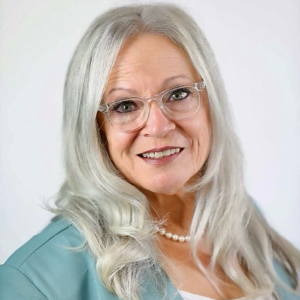
Barbara M De Groot
Heartwell Services, United States
Irina Koyfman
Affinity Expert, LLC, United States
Stacey Frawley
Stony Brook University, United States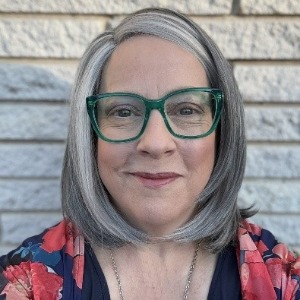
Joyce Anne Finch
Middle Tennessee State University, United States
Laura Spitaleri
Mayo Clinic, United StatesSubmit your abstract Today


Title : Overview of artificial intelligence in healthcare
Adele Webb, Strategic Education, Inc., United States
Title : Beyond cultural competence: Integrating cultural intelligence into professional nursing education and practice
Debra A Hrelic, University of North Carolina Wilmington, United States
Title : Experiences of online health information seeking behavior among patients with initial stroke during the transition period in china: A qualitative research
Xiao Yan Dong, Zhengzhou University, China
Title : A call to action for the integration of an underutilized resource: The evidence for Parkinson’s disease and music therapy
Carole Graves, Columbia University School of Nursing, United States
Title : A call to action for the integration of an underutilized resource: The evidence for Parkinson’s disease and music therapy
Klaudia J Zalewska, Columbia University School of Nursing, United States
Title : Digital health engagement in stroke patients: A concept analysis
Anni Chang, Zhengzhou University, China